The Qantas 2011 swansong


Originally wrote this as my final number for 2011 but events over took me and I just found the draft so I thought I would put it up anyway.

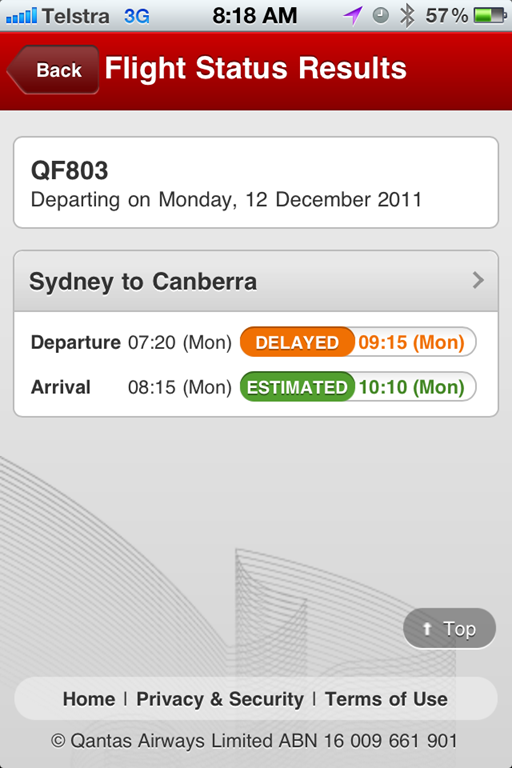
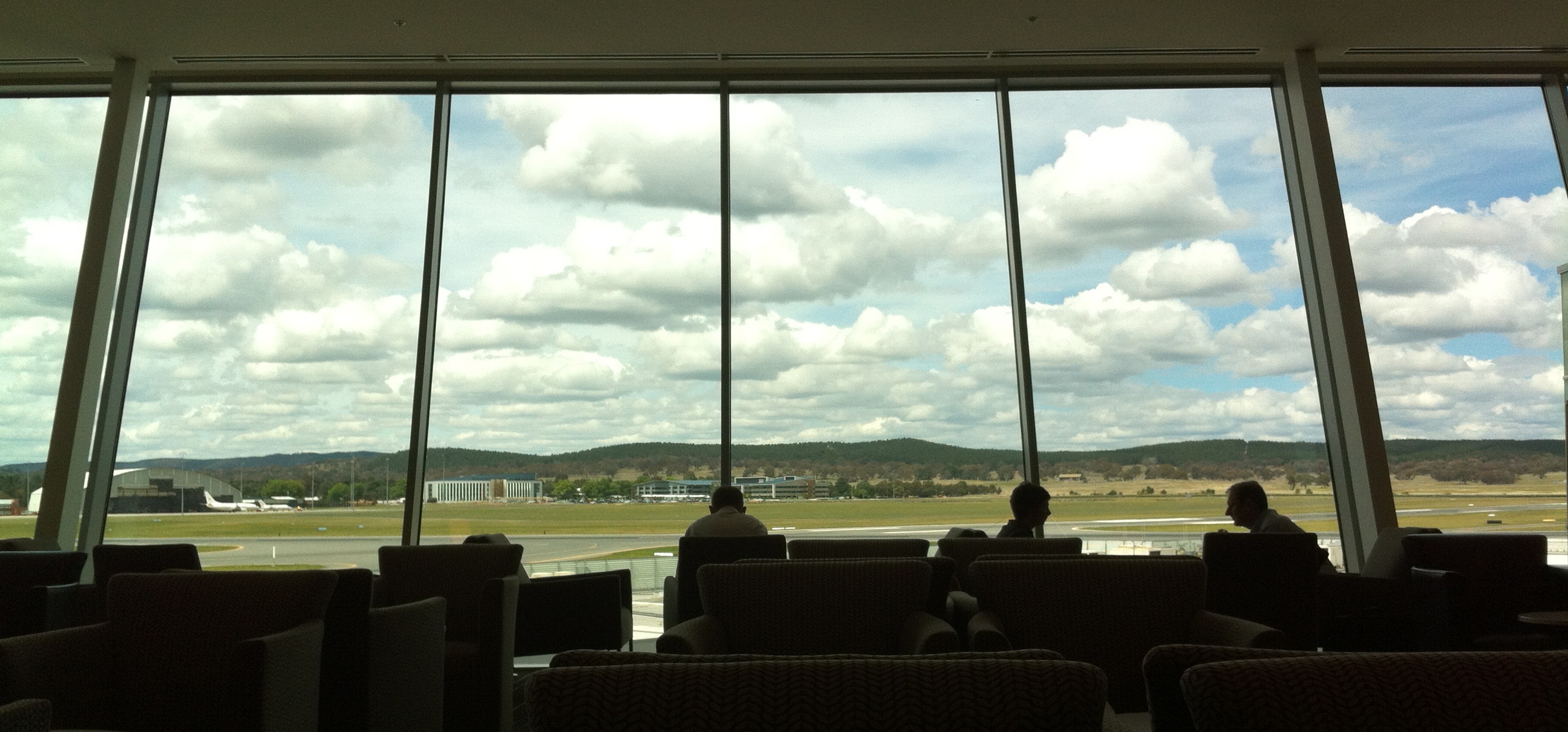
I was going to be melancholy about my final week on Qantas this week as this is my last week of travel for the 2011 calendar year.  I was going to talk about the good things Qantas do, the massive infrastructure and the employees who in their own ways go out of their way to help hapless travellers, such as my self.  I could talk about the magnificent engineering facilities that the Sydney Qantas Club overlook but at 7:20 this morning (Dec 12, 2011), that all turned to dust.  Someone had fed the Gremlins again after midnight and after closing the door, giving us the safety demonstration we were back at the gate where we sat.  Some time after 8:00 AM we were herded back to the Qantas Club for more coffee for which I have had so much this morning, I am starting to show the early symptoms of caffeine poisoning.  We then sat in the club while the next flight for Canberra left – allegedly no seats but I could not happen to notice that Joe Hockey and Malcolm Turnbull who were on our original flight were no where to be seen on the later flight.  So much for no seating on the later flight.

What irks me more than anything else is the contemptuous way in which we get treated.  If I am 5 seconds late for a flight I have pay additional fee’s or in some cases, purchase a new ticket.  If Qantas screw up, we, as passengers still get messed around.  Their is no come back on the airline as the provider of the service.  Today is an annoyance and I will miss an important meeting with my client and this equates to a economic loss for me as I bill bill by time and sitting in airport lounges is not a productive use of my time as this equates to non-billable time.  A few weeks back Bruce, a colluge of mine in Canberra, had a booking for Qantas to Sydney the Jetstar to Maroochydore.  The Qantas flight from Canberra was cancelled, so Bruce was bumped to the next flight.  This caused him to miss his connecting Jetstar flight.  Do you think Jetstar could care.  No, he had to purchase a new ticket yet it was Qantas (who by the way own Jetstar 100%) who caused him to miss his flight.  Good one Alan!

IMG_0172

Jetstar botched landing at Melbourne Airport | Pilot pressure caused errors

Andrew Heasley – December 13, 2011

A JETSTAR Airbus A320 slipped to within 51 metres of the ground during a botched, aborted landing at Melbourne airport, as pilots fumbled with wrong flap settings and a cacophony of cockpit alarms, Australian Transport Safety Bureau investigators have found.

A sequence of mistakes on a July 28 evening flight from Newcastle to Melbourne left the pilot flying the plane – a cadet recruit with just 300 hours Airbus flying experience – overwhelmed. The captain sitting next to him was so busy trying to recover the situation that his capacity was also compromised.  On landing approach the plane was variously descending too fast, the flaps weren’t extended properly and an altitude alert went unheard by both pilots.  The first officer may have experienced ”cognitive overload”, Jetstar told investigators.  The captain reported a ”high workload” in supervising the first officer, ”reducing his cognitive capacity and situation awareness of the aircraft’s configuration”, the airline said.

At 75 metres, the captain realised the plane wasn’t configured properly for landing, just as the ground warning system sounded and a message on a screen flashed: ”Too Low Flap” – the flaps were on the wrong setting.  The captain called off the landing and the first officer throttled the engines to climb as a second terrain warning sounded.  Mentally overloaded, the first officer failed to reset the flaps, leaving it to the captain.  Compounding matters, another alarm went off due to an air conditioning fault.

The Australian and International Pilots Association had warned a Senate inquiry this year about the risk of fast-tracking inexperienced pilots to airline cockpits.  But a Jetstar spokeswoman yesterday defended its methods.  ”Any pilot who sits behind the controls of a Jetstar aircraft has the skills and qualifications to be there,” she said.  ”Go-arounds [aborted landings] are not uncommon and are a part of our systems of checks and balances for safe operations.”

In a separate incident, two Jetstar pilots made separate engine power calculation mistakes prior to take-off from Darwin for Bali on June 12.  The first power calculation was made with the incorrect aircraft weight, then with the wrong length of runway, compounded by a pilot short-cut to bookmark the wrong data table for cross checking the calculations by the second pilot.  Jetstar later told all pilots that take-off calculations have to be checked independently and the practice of bookmarking data tables ”must cease immediately”.

via Jetstar botched landing at Melbourne Airport | Pilot pressure caused errors.

And on the 8th day, God created airline Baggage Services.

The good lord must have been bereft of ideas by that time. What have we done as a society to have Qantas Baggage Services foisted upon us?

Those of you who regularly read this, you know who you are, are quite au fait with my feelings on most things Qantas and the general state trashiness that “the spirit of Australia” has become. Well, have I got news for you, The mess of Qantas in the club lounges and cabin is nothing compared to the mess with Baggage Services. These people know how destroy self esteem. This all started when the automatic bag tags were not recognised by the auto check-in luggage machines – bad start as it was going to involve human interaction. We stood in line at the Qantas Club and Status traveler counter for what seemed like an entirety. The baggage woman then looks up ans walks off leaving 6 or 7 people just standing in the line. Nice. Finally we get to the counter and the second person with a minimum of fuss checks our bags. This was the opening to the total failings at Sydney airport.

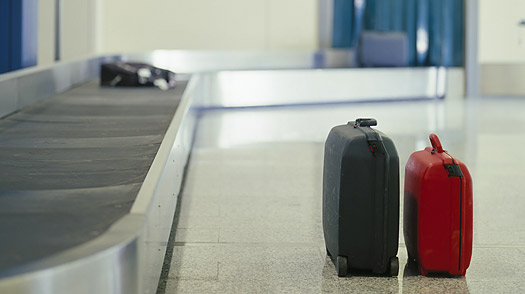
Sydney baggage hall. At first I thought I must be standing at the wrong luggage carousel. All the priority luggage came out, then all the rest came out. I thought I was standing at the wrong carousel. No I could see people from the flight near by. When the bags finally arrived, 4th from the end, I said to my daughter, so much fro the priority tags and the guy standing next to me, who I have never seen in my life before, joined in complete agreement. I kid you not, the clowns in baggage services have no idea. Thank you Qantas for being treated so well. It’s the final parting shot as you leave the airport. A two fingered salute to say thank you for flying.

In hindsight, at least they didn’t loose the bags!

Place in a blender, one Kangaroo, one Irishman and three unions!

Qantas shakes the status quo

by Stephen Bartholomeusz
Politicians and union leaders searching for a context in which to place the damaging confrontation with Qantas could do a lot worse than looking at the latest International Air Transport Association forecasts for the airline industry and some of the comments of its chief executive, Tony Tyler, in particular.

At the moment IATA, which tends to be consistently over-optimistic, is keeping to its forecast of a $US6.9 billion profit for the industry in 2011 and has only modestly revised down its 2012 forecast, from $US4.9 billion of profit to $US3.5 billion. At that level the industry would be generating a profit margin of only 0.6 per cent.

Should the eurozone crisis deepen, a banking crisis develop and Europe fall into recession, however, IATA would expect all regions to fall into losses and the industry overall to lose about $US8.3 billion. As it stands, that looks the more likely scenario than the more benign outcome in the eurozone that underpins the central forecast.

The Qantas group, of course, is profitable. Even after absorbing around $100 million of losses as a result of the disputes with three of its unions that led to the grounding of its fleet, it still expects to generate underlying earnings before tax of between $140 million and $190 million in the December half.

That profit, however, is based on the strength of its domestic franchise, its frequent flyer business, its Jetstar brand and its other non-aviation operations. Its international operations, it has said, are losing $200 million a year.

If IATA’s view of what 2012 might look like in the event that the eurozone authorities can’t finesse a positive and stabilising outcome imminently, the outlook for Qantas’ international business – in which it has $5 billion of capital tied up – would look even less palatable.

Even on IATA’s more sanguine outlook for 2012, the industry would have lost more than $US26 billion over the past decade despite generating revenue of $US5.5 trillion. It is a terrible industry, not helped by the interventions of government or the lack of comprehension of its inherent vulnerability by unions.

‘’You might say that the normal state of aviation is crisis and once in a while we have a few consecutive months of benign conditions – the danger of which is that everyone from suppliers to unions to governments think that airlines are fat cash cows ready for milking in one way or another,’’ Tyler said.

It is the denial of the reality of the international aviation industry and its impact on Qantas’ business that underpins union attempts to freeze those operations in a 1960s status quo and the government’s inability to comprehend why Alan Joyce took that very difficult and financially painful decision to ground the fleet.

If IATA’s fears about the eurozone were borne out, the Asia-Pacific region, generally the most profitable in the globe, would, with the rest of the world, lose money – more than $US1 billion – rather than the $US2.1 billion profit IATA’s central forecast anticipates.

For Qantas , flying point-to-point long haul routes against Asian and Middle Eastern hub carriers with far more modern and efficient products, even the less threatening outcome isn’t going to materially reduce the tide of red ink flowing through its international business. A European meltdown would be very unpleasant.

International aviation isn’t, and never has been, a good business. Over the past 40 years, according to Tyler, the industry has actually made money – but generated an abysmal profit margin of only 0.3 per cent.

In the past decade the emergence of new carriers out of the Middle East and Asia has meant that despite relatively strong growth in passenger numbers, yields have been squashed by the torrent of new capacity pouring into the industry.

Qantas’ international operations need to be radically restructured, their cost base lowered and its configuration re-shaped. Joyce’s strategy of launching a new premium carrier within Asia alongside the rapidly-growing Jetstar business – one of the reasons for the union hostility – might be risky but the status quo isn’t an option.

Even if Qantas could wear the losses, while there is no prospect of generating a return from those operations it isn’t possible for the Qantas board to justify the massive investment required to completely overhaul and upgrade the international product to make it more competitive. That’s why the timetable for the fleet renewal program has been continually pushed out into the future.

Whether or not IATA’s more pessimistic outlook for 2012 is confirmed, the actions taken by Joyce and his board this year to try to do something about the uneconomic structure of their international business are validated by the continuing sub-economic state of the international industry

via Qantas shakes the status quo | Stephen Bartholomeusz | Commentary | Business Spectator.