Qantas Airbus A380 fleet checked for cracks

Qantas will inspect its fleet of Airbus A380s for cracks on its wings following a European directive, but the engineers union says it should have happened months ago.

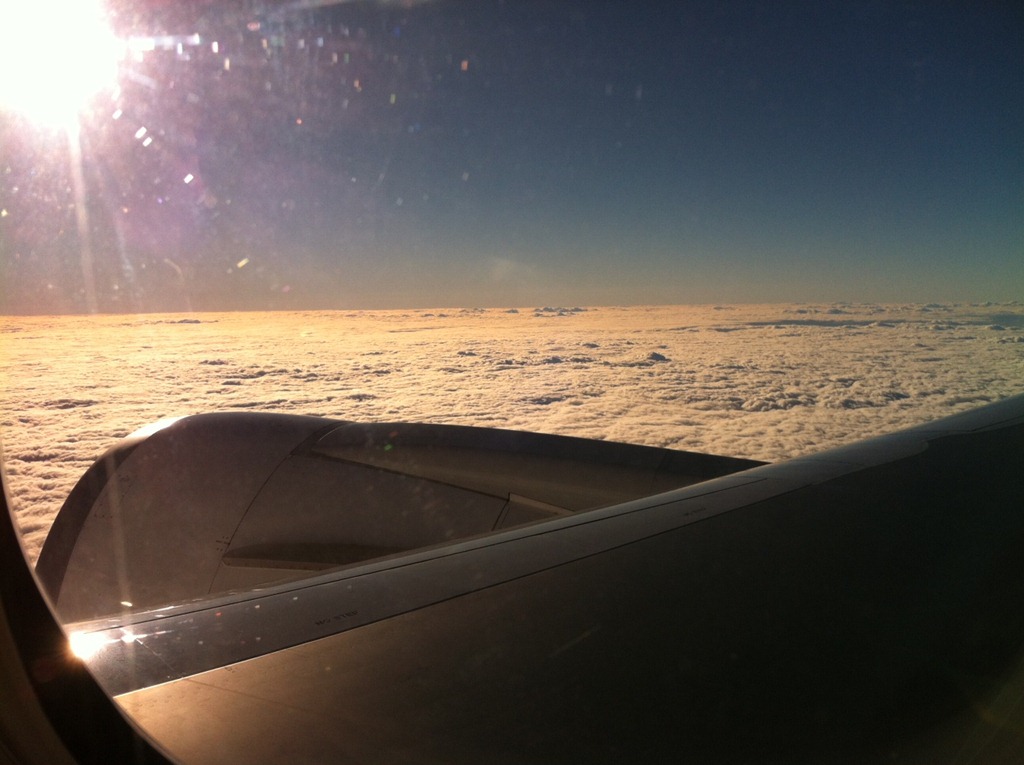
The airline will check all 12 of its superjumbo jets for structural damage on parts inside the wings following directions from the European Aviation Safety Agency EASA.  The agency last month issued an airworthiness directive calling for “a detailed visual inspection” of the 20 planes that have flown the most, but that has now been extended to the entire fleet of 68.  A Qantas spokeswoman said the airline would “comply fully with the EASA directives” and begin inspections in the next few weeks.  But Australian Licensed Aircraft Engineers Association ALAEA federal secretary Steve Purvinas said that while the inspections were necessary, they should have been made sooner.  Mr Purvinas said cracks were first discovered in the so-called “wing rib feet” — the metal brackets that connect the wings ribs to its skin — in several A380s in the global fleet months ago.”Weve been calling for these checks to take place for two months now,” Mr Purvinas said.  “It shouldnt have taken them two months to work out that these cracks are only going to get bigger, and the inspection should have been mandatory as its now been made.”

Senior aviation school lecturer at the University of NSW, Peter Marosszeky, said the checks were not cause for alarm, because the aircraft had only been flying internationally since 2007 and some were likely to have minor “teething problems”.Mr Marosszeky, also a former Qantas engineer, said the ordered checks on the aircraft were “an eminently sensible idea”.  He said cracks such as those discovered so far posed “no threat to safety”, and that routine checks meant it was “very unlikely” such cracks could worsen to the point of becoming dangerous.  However Mr Purvinas said the cracks were only first discovered by engineers carrying out repairs, and had not been picked up during routine checks.Qantas grounded one of its A380s on Sunday after 36 hairline cracks were discovered on its wings.  The plane was hit by severe turbulence last month on a flight from London to Singapore and seven people were injured.  Qantas said those cracks were “not related to the turbulence, or specific to Qantas”, but had been traced back to a manufacturing issue, and had no effect on flight safety.  It also said the type of cracking was different to cracking found on certain A380s in the global fleet.AAP
via Qantas Airbus A380 fleet checked for cracks.

Qantas hit by Moody’s credit downgrade

dep_melbourne

High fuel prices, strong competition and a challenging operating environment have prompted Moody’s to downgrade Qantas Airways Ltd’s credit rating, bringing the airline just one notch away from losing its investment-grade rating, according to media reports.

Qantas is expected to cut back its capacity and launch a review of discretionary spending in an effort to address the factors that led to the downgrade, according to The Australian.  Moody’s cut Qantas’ long-term unsecured rating from Baa2 to Baa3 and its short-term rating from P-2 to P-3, and came after Air New Zealand warned of a difficult year to come.  Baa3 puts Qantas one notch above a non-investment grade rating, or junk status.  In a statement, Qantas said it remains in a strong funding position, citing its cash balance of more than $3 billion and strong cash flows, the reports said.

A Moody’s official said the airline’s credit rating has been under pressure for several years.  “The ratings downgrade reflects our view that Qantas’ operating challenges will continue to pressure its financial profile such that financial leverage is expected to remain above the level consistent with the previous Baa2 rating,” the official said, according to Fairfax Media.  Moody’s put Qantas on review for a potential downgrade in October.  The airline was last downgrade by Moody’s ― from Baa1 to Baa2 ― in February 2009.

Qantas remains one of only three airlines in the world to retain an investment-grade credit rating from Moody’s, alongside Air New Zealand and American airline Southwest.

via Qantas hit by Moody’s credit downgrade | News | Business Spectator.

Why airlines make you turn off your mobile phone

They may seem like silly rules – turn off all mobile phones and electronic devices during takeoff or landing of a plane. And, no mobile phone use during the flight.

Those are the rules 30 Rock star Alec Baldwin was accused of breaking when he was kicked off an American Airlines flight after refusing to power down. The actor vented on Twitter that he was berated by a flight attendant for playing a game while the plane sat at the gate not moving.

But why all the fuss?

Decades ago the US Federal Aviation Administration and the Federal Communications Commission determined that electronic devices could send signals that would interfere with the equipment on a plane, officials said. Therefore, all electronic games, MP3 players and laptops have to be turned off until the plane gets above 10,000 feet.

Mobile phones are not to be used for calls or Internet use on a cellular network anytime the plane is in the air, though they can be used in “plane mode” for such activities as playing games or updating one’s calendar.

Brent Bowen, the head of the Department of Aviation Technology at Purdue University in Indiana, said there is little research to show if personal electronic devices actually cause a problem. But that doesn’t matter.

“It’s a federal air regulation, and the crew is responsible for enforcing it,” he said. “These rules apply to all airlines in America and all airlines operating in America.”

FAA officials would not discuss the use of electronics on planes but instead sent a fact sheet explaining the rules.

According to their written explanation, there are too many unknowns about the radio signals that hand-held electronics and mobile phones give off. At lower altitudes, any interference could be more of a safety hazard, since the pilot and cockpit crew need to focus on critical arrival and departure duties, the FAA said in its statement.

As for Wi-Fi systems now available on some flights, manufacturers must obtain certification from the FAA showing they do not interfere with the plane’s systems anytime during flight, the FAA said.

Bowen said there have not been enough studies to determine whether the ban on electronic devices during takeoff and landing should be relaxed, and further studies are unlikely, because of funding.

“Why should we spend millions of dollars in research when you can just cut it off for 10 minutes?” he said.

from The Age Newspaper: Why airlines make you turn off your mobile phone.


Commuterflyer: The other side of the coin is safety.  If something goes wrong at 50,000 feet, your are a whole world of trouble,  If something goes wrong on take off or landing and you survive the initial impact, then you have a chance of getting out.  To increase the odds, the airlines have you all sitting in neat rows with no distractions so if you do get the signal, you re ready to run.

Jetstar botched landing at Melbourne Airport | Pilot pressure caused errors

Andrew Heasley – December 13, 2011

A JETSTAR Airbus A320 slipped to within 51 metres of the ground during a botched, aborted landing at Melbourne airport, as pilots fumbled with wrong flap settings and a cacophony of cockpit alarms, Australian Transport Safety Bureau investigators have found.

A sequence of mistakes on a July 28 evening flight from Newcastle to Melbourne left the pilot flying the plane – a cadet recruit with just 300 hours Airbus flying experience – overwhelmed. The captain sitting next to him was so busy trying to recover the situation that his capacity was also compromised.  On landing approach the plane was variously descending too fast, the flaps weren’t extended properly and an altitude alert went unheard by both pilots.  The first officer may have experienced ”cognitive overload”, Jetstar told investigators.  The captain reported a ”high workload” in supervising the first officer, ”reducing his cognitive capacity and situation awareness of the aircraft’s configuration”, the airline said.

At 75 metres, the captain realised the plane wasn’t configured properly for landing, just as the ground warning system sounded and a message on a screen flashed: ”Too Low Flap” – the flaps were on the wrong setting.  The captain called off the landing and the first officer throttled the engines to climb as a second terrain warning sounded.  Mentally overloaded, the first officer failed to reset the flaps, leaving it to the captain.  Compounding matters, another alarm went off due to an air conditioning fault.

The Australian and International Pilots Association had warned a Senate inquiry this year about the risk of fast-tracking inexperienced pilots to airline cockpits.  But a Jetstar spokeswoman yesterday defended its methods.  ”Any pilot who sits behind the controls of a Jetstar aircraft has the skills and qualifications to be there,” she said.  ”Go-arounds [aborted landings] are not uncommon and are a part of our systems of checks and balances for safe operations.”

In a separate incident, two Jetstar pilots made separate engine power calculation mistakes prior to take-off from Darwin for Bali on June 12.  The first power calculation was made with the incorrect aircraft weight, then with the wrong length of runway, compounded by a pilot short-cut to bookmark the wrong data table for cross checking the calculations by the second pilot.  Jetstar later told all pilots that take-off calculations have to be checked independently and the practice of bookmarking data tables ”must cease immediately”.

via Jetstar botched landing at Melbourne Airport | Pilot pressure caused errors.